The summer of 1991 was a transitional time in my life. Unaware of it then, I was a little over a year away from leaving the country for greener pastures. That was the summer before I started my first year of high school. The level-up meant an entirely new school with kids I’d not seen since the year I spent with some of them in 3rd grade. I started growing my hair out that summer. I ran from the cops for the first time that summer. I made out with a girl in her mom’s closet. I also threw the baseball around, mowed some grass, and finished up a 2-year run as a hooligan shoplifter.
I thought my most pivotal decision that summer would be when I went out for the football team. I took to the lifting program like a duck to water. By the end of summer, I had added a little over 100 pounds to my squat. When my dad found out about football, he told me to quit. I told him the coach liked my size and effort and that he had plans for me at tight end and on the defensive line. “Either you tell the coach that I’m not gonna let some halfwit asshole screw up my kid’s knees, or I’ll be at your next practice and drag you off the field by your helmet.” Dad had undergone a half dozen knee surgeries because of high school football. I quit the team. As it turns out, that was my most pivotal decision that summer.
Even though I was off the team, I was still part of the lifting program. Every Monday/Wednesday/Friday, we linked up at the high school and threw some iron around. It was a smelly, sweaty affair (and I loved it). There is something beautiful in moving something that doesn’t want to budge.
The coaches let us bring our own music to play on the boom box. Most of the guys didn’t care what was playing — I did. Van Halen’s For Unlawful Carnal Knowledge, Alice In Chains’ Facelift, and Metallica’s Black Album were all big players on lifting days.
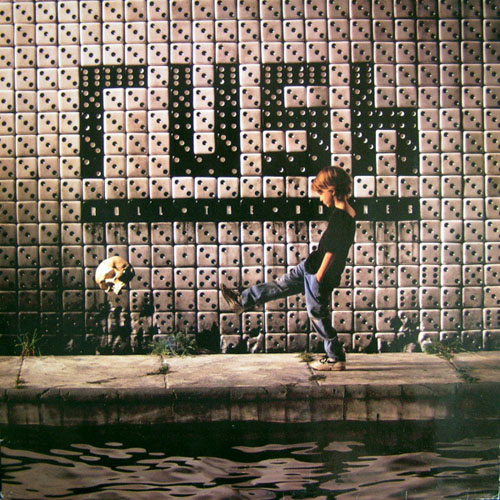
My mom taught at the elementary school across the railroad tracks from the high school. Because she had to get there for bus duty, morning meetings, or whatever other sundries her principal heaped on her, I was routinely dropped off an hour early. Since our first period was gym class, I had access to the weights an hour earlier than everyone else. Coach Kumrow was always in there working out, so I started joining him. One of these extra workouts was when I first heard Rush’s Roll The Bones.
Released on September 3rd, 1991, Roll The Bones is a return to form for Rush, a full-on prog rock revival the band had hinted at on 1989’s Presto. Stripping away many of the layers of synthesizers the band had allowed to overwhelm and weigh down albums like Power Windows and Hold Your Fire, Rush streamlined its groove (allowing for further exploration).
A shorter-than-usual tour for Presto left the band hungry for more playing time. Rather than booking another tour (and buoyed by positive fan response to some of the newer songs), Rush decided to get back into the studio. Setting up in Chalet Studios in Claremont, Ontario, the band spent two and half months crafting what would become Roll The Bones. While singer/bassist Geddy Lee and guitarist Alex Lifeson wrote the songs, drummer and lyricist Neil Peart would work away at the words (and his otherworldly drum parts). Peart wrote many of the lyrics on the album over the previous two years. The drummer had gotten into writing right before bed — putting pen to paper while in a “dreamlike state”. The results are some of Peart’s darker lyrics. Many of the songs touch on chance — the flip of the coin, the roll of the dice, the spinning of the wheel.
“Dreamline”, “Bravado”, and “Ghost Of A Chance” are all standout tunes, as is the title track (yes, goofy Geddy rap and all) — hey, have a little fun in your life!
The instrumental “Where’s My Thing” is Rush at its best — Geddy and Alex play hard-charging, take-no-prisoners prog rock while Neil gallops along a vast wilderness of synths. It’s a burner of a song.
Lifeson teased a shift on Presto, but his vision of a funkier Rush became fully realized on Roll The Bones. Rush as a funk band?! No one will ever confuse them with Parliament, but dialing back the keyboards allowed Lifeson to tap into a more unconfined style. The funky wing-spreading breathed new life into the band.
It is only natural for an artist to be affected by their surroundings, and Roll The Bones has received criticism for trying to sound “modern”. I cannot fathom anyone thinking the album was trying to win over the growing fanbase of the music bubbling up from the Pacific Northwest. It seems equally silly to think that Geddy Lee’s little rap during the title track was an attempt at winning over the hip-hop demographic. “We were looking for something that felt different and were trying to find a funk vibe — you know, a white Canadian funk vibe, not an actual real funk vibe,” said Lee. “Then Neil came in with this crazy rap he’d written, which was very angular and not very rap-like rap.” In reality, it hurt radio play in certain markets — a few rock stations refused to play “Roll The Bones” because of the rap.
An allegorical tale of chaos, Roll The Bones is an enjoyable (if slightly inconsistent) listen. No one will confuse it with 2112 or Moving Pictures, but the band deserves credit for stretching out into new avenues of expression. In doing so, they crafted arguably the best album Rush released in the Nineties.
Also, credit to my dad — my knees are still in pretty good shape.
Track List:
- Dreamline 9/10
- Bravado 9/10
- Roll The Bones 9/10
- Face Up 7/10
- Where’s My Thing 9/10
- Big Wheel 7/10
- Heresy 6/10
- Ghost Of A Chance 8/10
- Neurotica 5/10
- You Bet Your Life 6/10
Grade: 75
 Illegal Foreign Object
Leave a comment