Dave Grohl was born to be a rock star. He took to superstardom like a duck to water, easing around the ebbs while going with the flows. Foo Fighters is arguably the biggest rock band of the last three decades — one of just a handful still capable of selling out a stadium in any part of the world.
Krist Novoselic has always seemed like he bangs away at his bass guitar for shits and giggles — a kind of ‘holy shit, they’re paying us for this?!’ vibe that has carried him through his career (mostly) unscathed.
Kurt Cobain — shit, probably never should have “made it”. He was a walking dichotomy — one part power pop hitmaker, one part self-loathing cynic. He was both an egomaniac and a cowering child with low self-esteem. Fame chewed him up and spit him out.
What a head trip it’s gotta be to be called a “savior”, a “god”, a “leader of a movement”. The man was punk rock white trash from the Pacific Northwest with a penchant for writing catchy tunes that made you want to bounce around the room with your friends, ferchrissakes. Being the “face of rock music” was probably not on his bingo card. And yet, there he was, trying (in vain) to push water uphill. How exhausting, particularly when you’ve burned your one healthy outlet down to the filter.
1993 was my second year living in Costa Rica. I was singing in a band, playing the odd party or school function, but mostly just getting off on playing music with my friends. The school I had attended in Texas before my move South was a shit show — a few years after I’d left, a student walked in and blew his brains out in front of his class. I didn’t know the kid, but that school was as cliquey as any I attended — have-nots were brutally mocked and bullied. I’ll dig deeper into all of that another time.
Coming from an environment like that, I tried to make new students feel comfortable when they started at my school in Costa Rica. A lot of us were children of parents running from something — all we had was us. That’s how I met Simon.
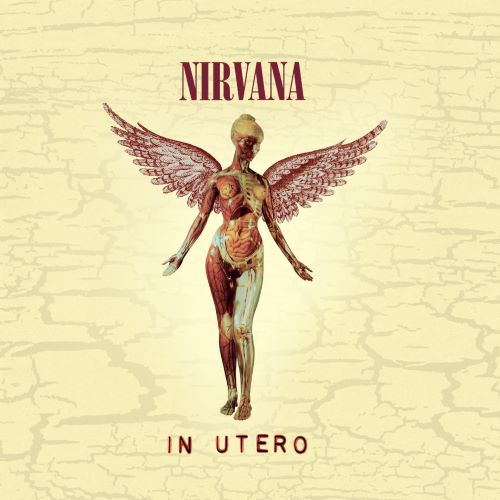
Simon was a Houston, Texas native and a complete psychotic. His dad was a whoremongering dickhead who owned a building company and had moved to Costa Rica to get rich. To keep Simon out of his hair, he let him use his Suzuki Sidekick. I liked riding around with Simon until he had his first drink. After that, all bets were off, and I found another way home. Still, my favorite memory of Simon involves riding around town, stopping into an Escazú record store, and scooping up two CDs: Danzig‘s Thrall-Demonsweatlive and Nirvana’s In Utero. Then, we went to POPS and tried to buy some girls an ice cream cone. They passed — hey, win some, lose some.
We blasted In Utero out of his extended axle Sidekick that day — top-down, volume up, all the way to San Pedro and back, just grooving to Nirvana’s unbridled attempt to destroy everything Nevermind had built.
Make a one-time donation
Make a monthly donation
Make a yearly donation
Choose an amount
Or enter a custom amount
Your contribution is appreciated.
Your contribution is appreciated.
Your contribution is appreciated.
DonateDonate monthlyDonate yearlyFrom the very start, Kurt wanted Steve Albini to produce In Utero. Albini produced two of Kurt’s favorite albums, Pixies’ Surfer Rosa and the Breeders’ Pod, and believed he could extract the sound Kurt was hearing in his head. Initially, Albini declined the offer to produce the album, describing the band as “R.E.M. with a fuzzbox”. After hearing the demos (and, if Albini is being truthful, taking pity on a band he saw being eaten alive by the record industry), Albini changed his mind. He instituted a “no contact” policy with anyone in the Nirvana camp outside of the band, calling them “the biggest pieces of shit I ever met”. The band, Albini, and technician Bob Weston holed up in Pachyderm Studio in Cannon Falls, Minnesota, for two weeks — no one from Geffen Records was allowed in the studio. The choice of studio was deliberate. “It was far enough away from anybody that the band knew socially, and we wouldn’t have a fucking TV crew out front every day or any drug dealers trying to do business,” said Albini.
When the record label and Nirvana’s management team heard the songs, they described the album as “unlistenable”. Frustrated, Kurt told writer Michael Azerrad, “I should just re-record this record and do the same thing we did last year because we sold out last year — there’s no reason to try and redeem ourselves as artists at this point. I can’t help myself — I’m just putting out a record I would like to listen to at home.”
Despite initially refusing to hand over the master recordings, Albini ultimately washed his hands of the project. Geffen brought in mastering guru Bob Ludwig to clean up the sound. Then, producer Scott Litt (of, ahem, R.E.M. production fame) remixed the singles “Heart-Shaped Box” and “All Apologies”.
Nirvana unleashed the In Utero in September of 1993. I loved the album from the moment I heard it — partially because of how different it sounded from Nevermind. Nevermind is a classic — one of a handful of albums with a legitimate claim to changing the industry — but In Utero sounds like one big “fuck you”. This is what you want? Fuck you, take this instead. Oh, and we’ve purposefully made it difficult to listen to — enjoy.
Still, despite Kurt’s attempt to get away from hitmaking, the guy had too much pop songwriter in him. In Utero sounds like a man worried about the fallout of fulfilling expectations and disappointing those with expectations. Songs like “Scentless Apprentice”, “Radio-Friendly Unit Shifter”, “Milk It”, and “Pennyroyal Tea” make every effort to offend pop-seeking ears — but no amount of fuzz-drenched shrieking can keep your head from bobbing along. Catchiness is a talent, and as much as it tortured parts of him, Kurt had buckets of it.
I’ve often wondered if music made Kurt sad at the end — if it left him, and that left him with, well, nothing left. Oh, I know, he had a wife and a daughter and friends who loved him, but depression’s such a tricky thing — those of us who deal with it are all affected differently by it. Kurt Cobain leaned hard into drugs and music because those were the things that never let him down, never bullied him, never made him feel small. Then, the drugs stopped working. Did the music let him down as well? Did it no longer bring him the joy it once did? Could he no longer find solace in sound? Expectations can suck the beauty out of anything. Or, was In Utero everything that Kurt had ever wanted to say — that perfect tightrope walk between pop perfection and complete chaos?
Tracklist:
- Serve The Servants 9/10
- Scentless Apprentice 9/10
- Heart-Shaped Box 10/10
- Rape Me 10/10
- Frances Farmer Will Have Her Revenge On Seattle 9/10
- Dumb 9/10
- Very Ape 8/10
- Milk It 8/10
- Pennyroyal Tea 10/10
- Radio Friendly Unit Shifter 8/10
- Tourette’s 8/10
- All Apologies 10/10
Grade: 90

 Illegal Foreign Object
Leave a comment