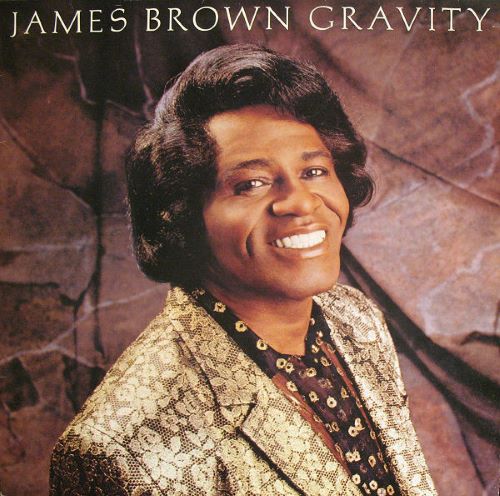
James Brown wasn’t alone — many bankable R&B stars of the sixties and seventies went through a tough stretch in the mid-eighties, compromising looks, sound, and style to remain relevant to the mainstream.
It made sense for the record labels. Take a marketable name, “modernize” their sound, and (hopefully) print money. Legendary record man Clive Davis made it work with Aretha Franklin’s 1985 smash single “Freeway Of Love” and Dionne Warrick’s 1987 duet with Jeffrey Osborne, “Love Power”, while Smokey Robinson scored a top 10 hit for Motown with “Just To See Her” after half a decade of relative obscurity.
“The Godfather Of Soul” weathered the disco era, even infusing it with his funky style to release his last record with any real focus, 1979’s The Original Disco Man, but after almost two decades as the crown jewel of Polydor Records, multiple flops led to the label dropping Brown from its roster. In 1985, Brown found himself at a crossroads — become a nostalgia act or lean into the times. Scotti Bros. Records saw an opportunity and signed Brown to a recording deal. The label had acquired the rights to produce and release the soundtrack to Rocky IV, the red, white, and blue-wrapped pugilistic propaganda piece from Hollywood action star Sylvester Stallone.
Scotti Bros. tasked Charlie Midnight and Dan Hartman (of “I Can Dream About You” fame) to write and produce Brown’s first single for the label — a song that updated his sound and reintroduced him to the mainstream. The duo came up with “Living In America”. Hartman and Midnight put together a top-notch band for the sessions. Stevie Ray Vaughan handled the lead guitar while session god T.M. Stevens thumped the bass. The Uptown Horns, who had recorded with everyone from Iggy Pop to Joan Jett to Lou Reed, laid down the brass.
MGM/UA released Rocky IV on November 27, 1985. Mixed reviews did nothing to stifle interest — the movie made $300 million at the box office. The United States loves nothing more than a win, and by God, Rocky Balboa was punching that Russian’s head in for us! The soundtrack, released on the same day as the film, sold more than one million units. “Living In America”, the second single from the soundtrack, hit #4 on Billboard’s Hot 100. Coupled with his brilliant, if highly choreographed scene during Apollo Creed’s fight entrance — Dolph Lundgren has said that Brown had so much issue repeating his dance moves during takes that Stallone had to show Brown where he needed him — Brown supposedly told Stallone, “I can’t control my moves” — James Brown was back on top (for about three months).
Make a one-time donation
Make a monthly donation
Make a yearly donation
Choose an amount
Or enter a custom amount
Your contribution is appreciated.
Your contribution is appreciated.
Your contribution is appreciated.
DonateDonate monthlyDonate yearlyThe early reviews on “Living In America” had Scotti Bros. excited about the future — Hartman and Midnight spent much of the time during the movie’s apex writing and producing enough songs for a full-length record. Including “Living In America”, the duo wrote and produced all eight tracks that comprised James Brown’s 53rd studio album, Gravity. Released in September 1986, the album flopped. Too much time had passed since “Living In America” made flag-waving audiences want to move their feet. When the first single, “Gravity” didn’t make a dent, Scotti Bros. turned its attention towards marketing When Seconds Count from fellow soundtrack mates Survivor (who scored one last top 10 hit with “Is This Love”) and “Living With A Hernia” parody king “Weird Al” Yankovic’s Polka Party! (it also flopped).
The effort is there, but Gravity is a Dan Hartman album with James Brown guesting as the vocalist. You can hear it in the sound. There are smatterings of Brown’s sound, like on “Turn Me Loose, I’m Dr. Feelgood”, but the album is so desperate to sound “modern” that “The Godfather of Soul” gets lost in the shuffle. Besides a touch of organ playing on “Return To Me”, Brown’s only involvement in the record was adding vocals to tracks completed during previous recording sessions.
Still, as far as mid-eighties synth pop goes, Gravity has a few moments worth mentioning. The song “Gravity” flopped as a single, but James Brown grunting and wailing over the Uptown Horns will always be fun. Maceo Parker carries the previously-mentioned “Turn Me Loose, I’m Dr. Feelgood” with some incendiary alto sax work, and “Goliath” is a funk jam that, if you squint hard enough, you could imagine Prince recording. On “How Do You Stop”, Steve Winwood lends his synth work to a moody ballad about not knowing when to tap the brakes. Brown might have had nothing to do with the songwriting, but this song sounds eerily autobiographical.
James Brown released three more albums for Scotti Bros. Records between 1988 and 1993 — none of them broke into the mainstream. Brown continued to pack buildings for his live shows until his death in 2006, but never again captured the magic of the first half of his career.
Tracklist:
- Gravity 7/10
- Let’s Get Personal 6/10
- How Do You Stop 7/10
- Turn Me Loose, I’m Dr. Feelgood 8/10
- Living In America 8/10
- Goliath 7/10
- Repeat The Beat (Faith) 6/10
- Return To Me 7/10
Grade: 70

 Illegal Foreign Object
Leave a comment