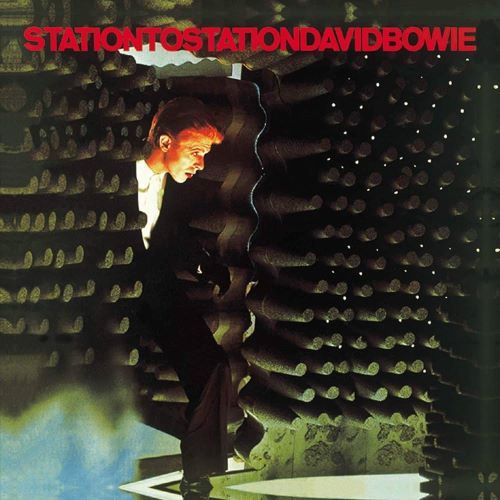
Today, I am thinking of the collection of stars that comprises the eternal essence of the legendary David Bowie. Station To Station, the first Bowie album I ever connected with, currently fills the room with dramatic, funky soul-pop brilliance. Bowie’s 10th studio record, Station To Station, is a beautiful, intimate record with an air of tortured, cocaine-fueled menace (Bowie confessed to barely remembering the sessions).
A few months before the Station To Station sessions, during the filming of The Man Who Fell To Earth, Bowie experienced a complete physical and mental breakdown. “I just threw my real self into that movie as I was at that time,” said Bowie. “It was the first thing I’d ever done. I actually was feeling as alienated as that character was. It was a pretty natural performance — a good exhibition of somebody falling apart in front of you.”
In September 1975, the usually well-prepared Bowie arrived at Cherokee Studios in Los Angeles for the Station To Station sessions with almost nothing. Besides a couple of rough arrangements, which guitarist Earl Slick said were changed so drastically that they sounded nothing like the original compositions, Bowie and the band wrote everything in the studio. The previous summer, Bowie acquired a cocaine addiction that consumed him. By early 1975, biographer David Buckley wrote that the singer subsisted on a diet of “red and green peppers, milk, and cocaine.” Paranoia ate away at him, and at one point, Bowie weighed just eighty pounds and became obsessed with witches stealing his semen, shadowy figures hurling themselves out of the windows of his home, and Egyptian artifacts. He also developed a morbid fear of Jimmy Page‘s connections to occultist Aleister Crowley and believed the Rolling Stones were trying to send him secret messages in their songs. Still, album co-producer Harry Maslin said he loved the sessions because everyone involved was “totally open and experimental in our approach.”
Make a one-time donation
Make a monthly donation
Make a yearly donation
Choose an amount
Or enter a custom amount
Your contribution is appreciated.
Your contribution is appreciated.
Your contribution is appreciated.
DonateDonate monthlyDonate yearlySwimming around in a swirl of George Murray basslines, Carlos Alomar and Earl Slick guitar licks, and Roy Bittan piano, the Thin White Duke bathes in a bouillabaisse of Krautrock, disco, and Philadelphia-inspired soul, washing away the last bits of glam-rock glitter that clung to his hard-to-reach places. “Station To Station”, the longest track Bowie ever recorded at 10 minutes and seventeen seconds, starts as a slow climb through the Kabbalistic Tree of Life before shifting into an up-tempo funk romp. “Golden Years” is my favorite song Bowie ever wrote, but knowledge of his spiraling addiction and paranoia during this time brands lyrics like “Run for the shadows in these golden years” as wholly sinister. It is rumored that “Golden Years” was written for Elvis Presley, whom Bowie worshipped, but the singers’ management teams couldn’t agree on terms.
“Word On A Wing” was written as a sort of protection against the “psychological terror” Bowie felt while making The Man Who Fell To Earth. During the song’s recording, Bowie began wearing a crucifix his father gifted him. He told the NME in 1980, “I wear it — I’m not sure why I wear it now even. But at the time, I really needed this.”
“TVC15” is a funky, piano-driven song inspired by a dream Iggy Pop had about a girl being eaten alive by a television. “Stay” is a straight-ahead funk-charged reworking of a previously released Bowie track, “John, I’m Only Dancing (Again)”. Earl Slick’s solo on “Stay” isn’t structured so much as it’s a random collection of explosive outbursts.
“Wild Is The Wind”, a Johnny Mathis cover, was inspired by a version Bowie heard Nina Simone perform. A friendship between the singers blossomed from a chance meeting at a private club in 1974. In the book What Happened, Miss Simone?: A Biography, Nina is quoted as saying, “[David’s] got more sense than anybody I’ve ever known. It’s not human — David ain’t from here.” Bowie’s “Wild Is The Wind” is a disquieting plea for love and one of his most emotional vocals.
Station To Station is a phenomenal accomplishment. The album gives the listener a glimpse behind the curtain — a looking-glass view of a man tired of the excesses while mired in the excesses. Years later, David Bowie admitted he knew he was in Los Angeles during those sessions solely because people told him he was there. It’s astounding that he wrote, recorded, and produced an album with so much beauty and tenderness despite an open sky’s worth of looming darkness enveloping him.
Tracklist:
- Station To Station 10/10
- Golden Years 10/10
- Word On A Wing 9/10
- TVC15 9/10
- Stay 9/10
- Wild Is The Wind 10/10
Grade: 95

 Illegal Foreign Object
Leave a comment