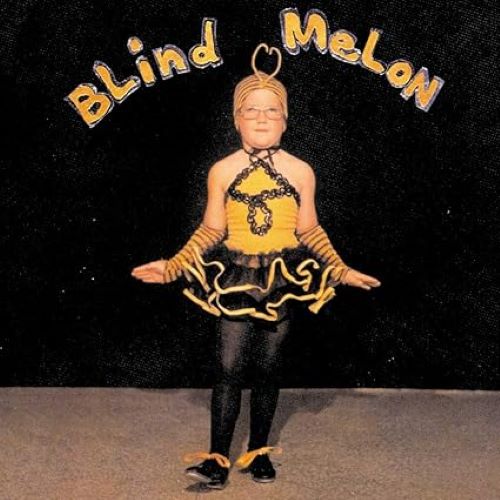
The anniversary of Shannon Hoon’s death came and went a few days ago. I meant to write something about him/his band/that first album on Saturday, but in digging into him, I kept digging into me (and since I have not been in the best mood, I avoided the topic). The last thing I need when scuffling for air is a slide into a death-coaxed depression. I got into a weird headspace the weekend before last — I’ve been mired in the muck ever since. Still, the words need writing (for whatever they’re worth to you).
I didn’t appreciate Blind Melon when I was a kid. I was aware of the band, but after the whole Bee Girl thing and the Axl Rose thing, I wrote them off as not being my thing. I didn’t dislike the band — I just didn’t care. The era played a role in my decision as well — there was too much good shit to listen to back then. The same year the guys in Blind Melon released their eponymous debut, Stone Temple Pilots, Pantera, Alice In Chains, Faith No More, Beastie Boys, Megadeth, White Zombie, R.E.M., and Dr. Dre also released classic records. There are at least 50 other classic albums from 1992 that I could rattle off — I won’t, but they’re out there. Blind Melon fell through the cracks.
1987 to 1995 were formative years for me — half of the music I listen to in 2023 is stuff I was digging into then. So, when a handsome hippie with a wild-ass falsetto came prancing through a wildflower field, man, I couldn’t make time for it.
But I was wrong. Blind Melon’s debut is a beautiful record.

When Capitol Records signed the band in 1991, the initial plan was to release an E.P., but when Sound City Studios sessions with longtime Neil Young producer David Briggs went awry (the band and label didn’t like Briggs’ “slick and doctored” mix), The Sippin’ Time Sessions were shelved. Instead, the band left California for North Carolina. There, Blind Melon came to life (born in part of The Goodfoot Demos that earned the band its recording contract). Once the band had the songs together, Capitol set them up in Seattle’s famed London Bridge Studios with Pearl Jam’s Ten producer Rick Parashar.
“Tones Of Home” and “Soak The Sin” are fun, jam band funk romps. “Sleepyhouse” is a drowsy sleepwalk that opens into a massive, heart-touching chorus.
“Drive” is a delicate plea from one junkie to another for a ride to score. Music nerds pay close attention to the riff that follows the “Jimi, we need to borrow this for a minute” lyric — it’ll make your day.
I write from my heart. Please, make a one-time, monthly, or yearly donation to support my work. Writing is my passion — thank you for your support.
Make a monthly donation
Make a yearly donation
Choose an amount
Or enter a custom amount
Your contribution is appreciated.
Your contribution is appreciated.
Your contribution is appreciated.
DonateDonate monthlyDonate yearly“Change”, the song that, in effect, started the band (Hoon first played it for guitarist Roger Stevens and bassist Brad Smith at a mutual friend’s party), is quintessential Blind Melon. Oh, I know “No Rain” had all the airplay, and it’s a fine song, but “Change” is special (and yes, I understand the dangers of attaching too much meaning to what you can also write off as junkie-warbling).
♫”I know we can’t all stay here forever
So I’m gonna write my words on the face of today
And then they’ll paint it”♫
Shannon Hoon wrote plenty about his addictions and the bubbling madness that overtook him in those dark moments. I can’t begin to understand that depth of addiction, but the depression that tags along with it — yeah, that’s old hat, I’m afraid. I handle it a lot better than I used to, but lately, it’s been getting the better of me. Without going into details, let me say this: expectation will almost always kick you square in the dick. You’re far better off being pleasantly surprised.
Still, in my saddest moments, I remind myself that these times are needed at least as much as the happy ones. Plus, there’s always tomorrow — well, until there isn’t — but at that point, you’ve shuffled on to something altogether different. Or, maybe you haven’t — guess we’ll find out when we get there/nowhere/everywhere (choose the adverb that best suits your beliefs).
Hoon, who in one breath could unleash a plaintive wail, then follow it with a drawly croon as sweet as molasses, fought his demons almost as often as he welcomed them into his arms. On Blind Melon, he and the band pull off a helluva trick by weaving despair and hopefulness into the same tapestry of sound. The duality of life — we all need a little of the light and the darkness — a taste of benevolence and malevolence to get through the days.
And so it goes (and forgive my aimless meandering).
Tracklist:
- Soak The Sin 8/10
- Tones Of Home 10/10
- I Wonder 8/10
- Paper Scratcher 7/10
- Dear Ol’ Dad 7/10
- Change 10/10
- No Rain 10/10
- Deserted 8/10
- Sleepyhouse 10/10
- Holyman 7/10
- Seed To A Tree 8/10
- Drive 9/10
- Time 8/10
Grade: 85

 Illegal Foreign Object
Leave a comment